
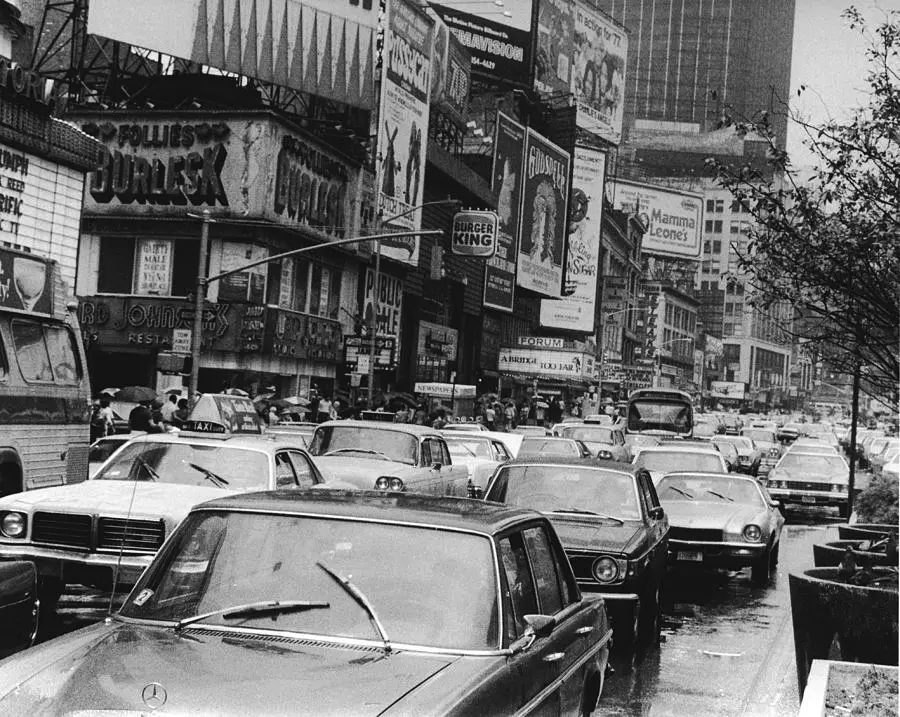
1980: Redesigning the “Crossroads of the World”
In November 1980, the Urban Mass Transportation Administration (UMTA) and the City of New York released an Environmental Impact Statement (EIS) proposing a radical transformation of Broadway through Times Square. The plan sought to close sections of Broadway to private vehicles and convert four blocks into a pedestrian and transit mall. Amenities such as trees, monuments, information kiosks, seating and bicycle lanes would replace existing traffic lanes, while buses and taxis would receive priority access through dedicated lay-bys.
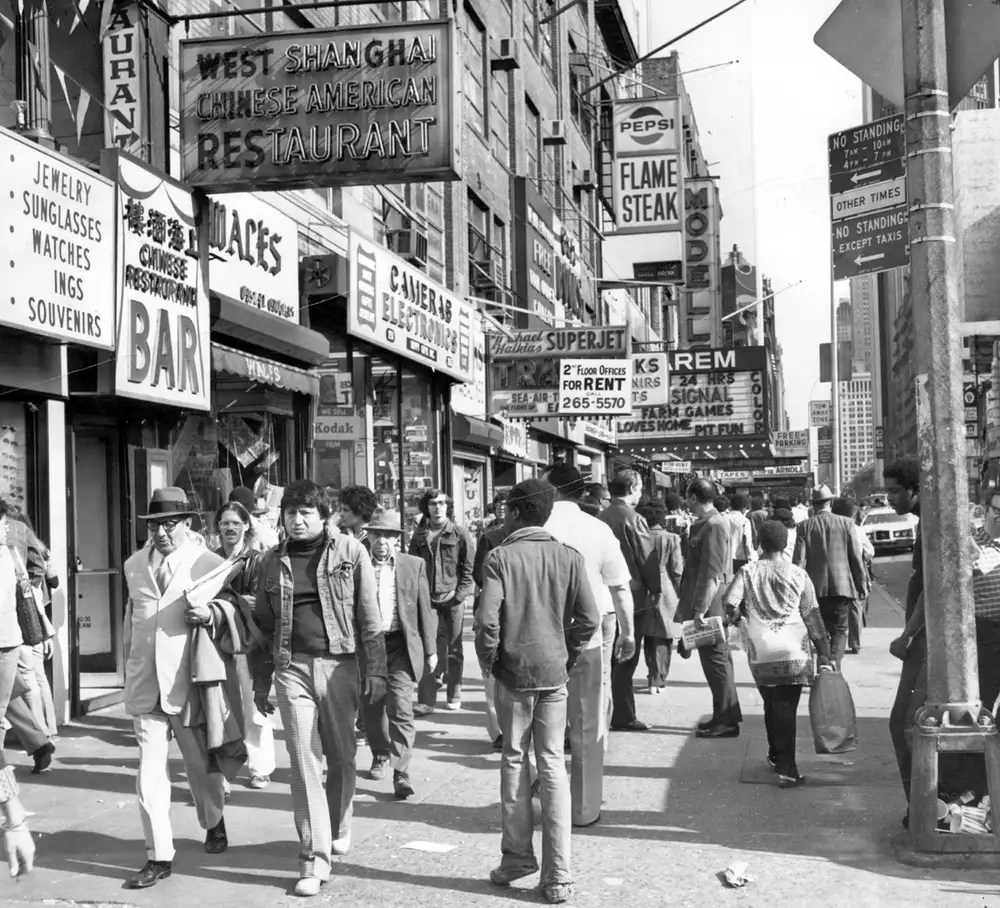
At a time when Times Square was associated with congestion, street crime and economic decline, the proposal framed this transformation as a critical investment in the city’s rejuvenation. The document argued that the “Broadway Plaza” would:
- Expand pedestrian space for an estimated 500,000 daily visitors
- Improve surface transit reliability and convenience
- Enhance safety by eliminating dangerous intersections
- Stimulate private investment, including a proposed $240 million, 2,000-room hotel
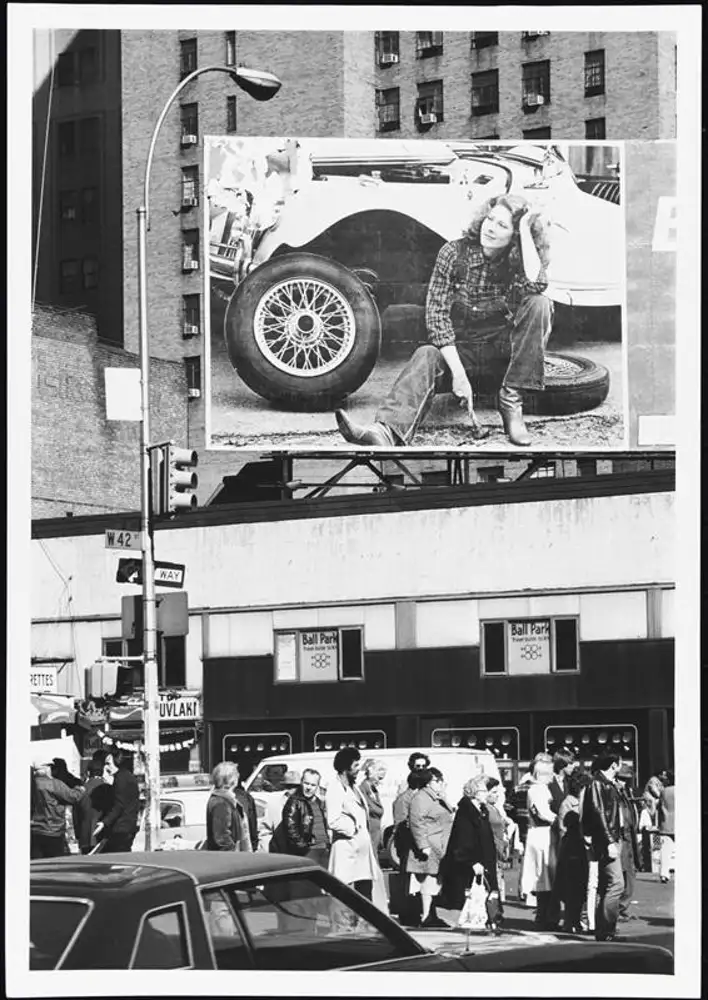
However, the EIS also acknowledged that the redesign would create significant adverse effects. It noted that the project would:
- Shift traffic to surrounding avenues
- Increase carbon monoxide levels and noise in adjacent corridors
- Disrupt local businesses during an estimated two-and-a-half-year construction period
Rather than promising universal improvement, the 1980 EIS presented the project as a calculated redistribution of environmental and mobility impacts. City and federal transit officials ultimately deemed these trade-offs acceptable, concluding that long-term community enhancement and economic revitalization outweighed the localized increases in congestion and environmental pressure elsewhere.
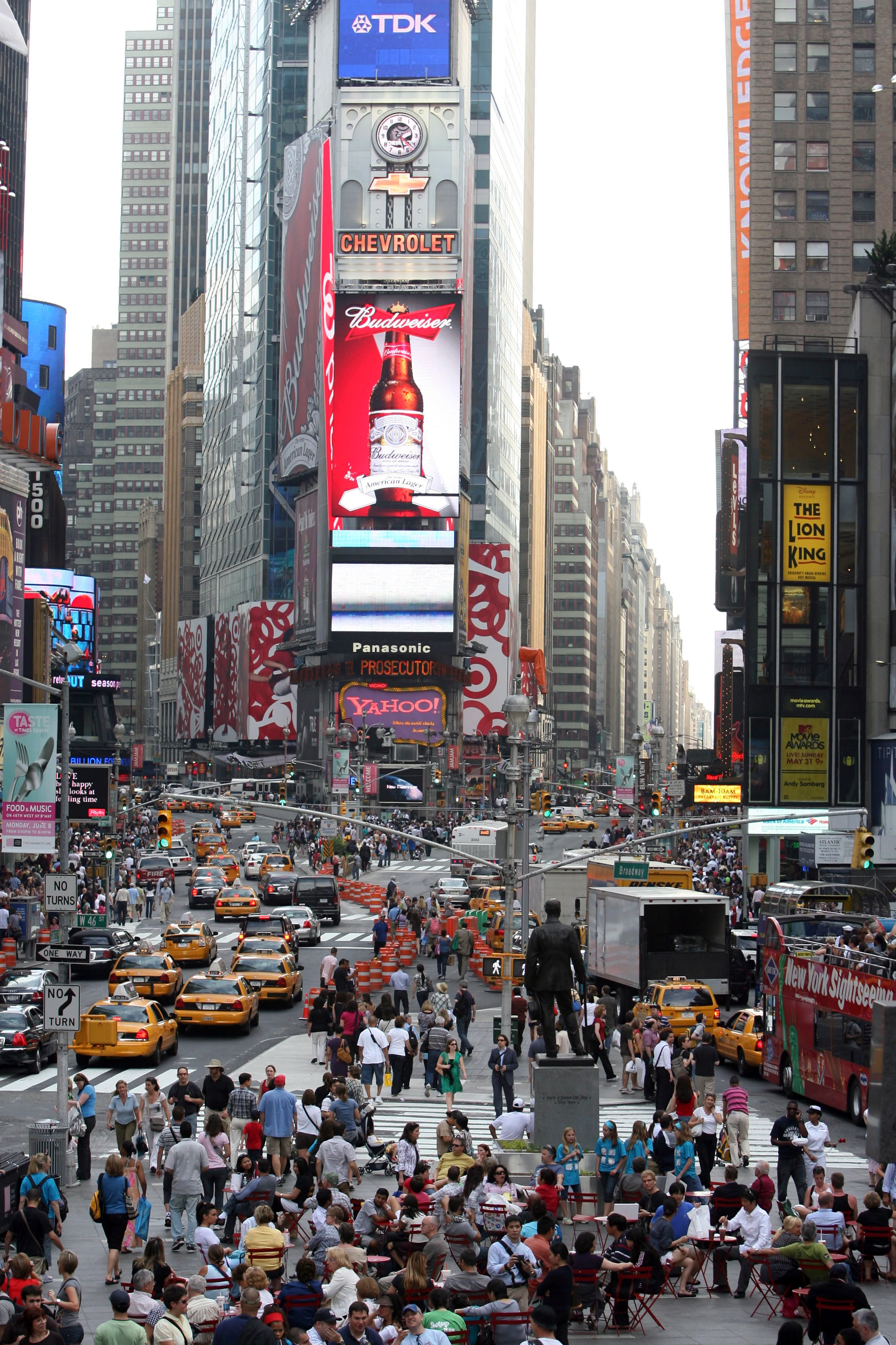
2009: Conflicting Visions of What Times Square Should Be
Although the 1980 EIS proposed an ambitious pedestrian transformation, the Broadway Plaza vision remained largely unrealized for nearly three decades, due to political resistance, business opposition and shifting priorities during the city’s post-1970s economic recovery. In 2009, under Mayor Michael Bloomberg and Transportation Commissioner Janette Sadik-Khan, the city finally revived the idea as a pilot program. Broadway was partially closed to cars using paint, lawn chairs and movable barriers to test whether pedestrian plazas could improve safety, mobility and economic activity in real time.
City Officials: Public Space as Economic Strategy
When the city implemented pilot pedestrian plazas in 2009, officials argued that pedestrian space would improve air quality, reduce accidents, increase economic activity and strengthen New York’s global reputation, an almost identical logic to that used in the 1980 Broadway Plaza EIS.
Traffic Critics: Redistribution of Burden
In 1980, concerns about traffic redistribution were central to opposition. The Automobile Club of New York formally criticized the original EIS, charging that the city downplayed the seriousness of impacts on crosstown streets and provided misleading estimates of travel speed delays. The 1980 EIS admitted that while Broadway itself would be clearer, the adjacent avenue expected to receive 60% of the diverted traffic would reach a worst-case condition, with a volume-to-capacity ratio exceeding 1.1, significantly slowing speeds and causing carbon monoxide levels to violate federal air quality standards. In 2009, similar arguments resurfaced, with critics warning that closing Broadway would simply shift congestion elsewhere.
Taxi Drivers: Industry Negotiation
“This is going to hurt all the taxi drivers. The [pedicab] bikers will take away our business because taxis can’t pick up people in front of Macy’s anymore.” — Angelo Cyriaque, Brooklyn cabbie
This concern, voiced during the 2009 pilot, echoed fierce opposition that had derailed earlier pedestrian plans in New York. In 1973, a proposed “Madison Mall” project failed largely due to pressure from taxi unions. To prevent a similar failure, city planners designed the Broadway Plaza to include a dedicated taxi lane and centralized dispatch operations. While drivers feared a loss of curb access, the officials argued that a structured boarding system would ultimately improve the efficiency of taxi service.
Residents and Cultural Critics: The Question of Character
"I worry about the character of the mall, with its string of disconnected plazas....they feel like odd leftover spaces." — Nicolai Ouroussoff, New York Times architecture critic
Some stakeholders in 1980 were even more scathing. Lynne Grey, coordinator of the Virgo Task Force, argued that turning the area into a pedestrian mall would undermine the professional aura of the Theater District. She described the proposed design as a “provincial honky tonk” and a “land grab by the current administration.” In 2009, architecture critics questioned questioned the coherency and aesthetics of the new plaza. Across both moments, these voices reveal a persistent tension over whether the plaza represents meaningful urban improvement or instead disrupts and diminishes the character that defines the neighborhood.
Measuring the Results
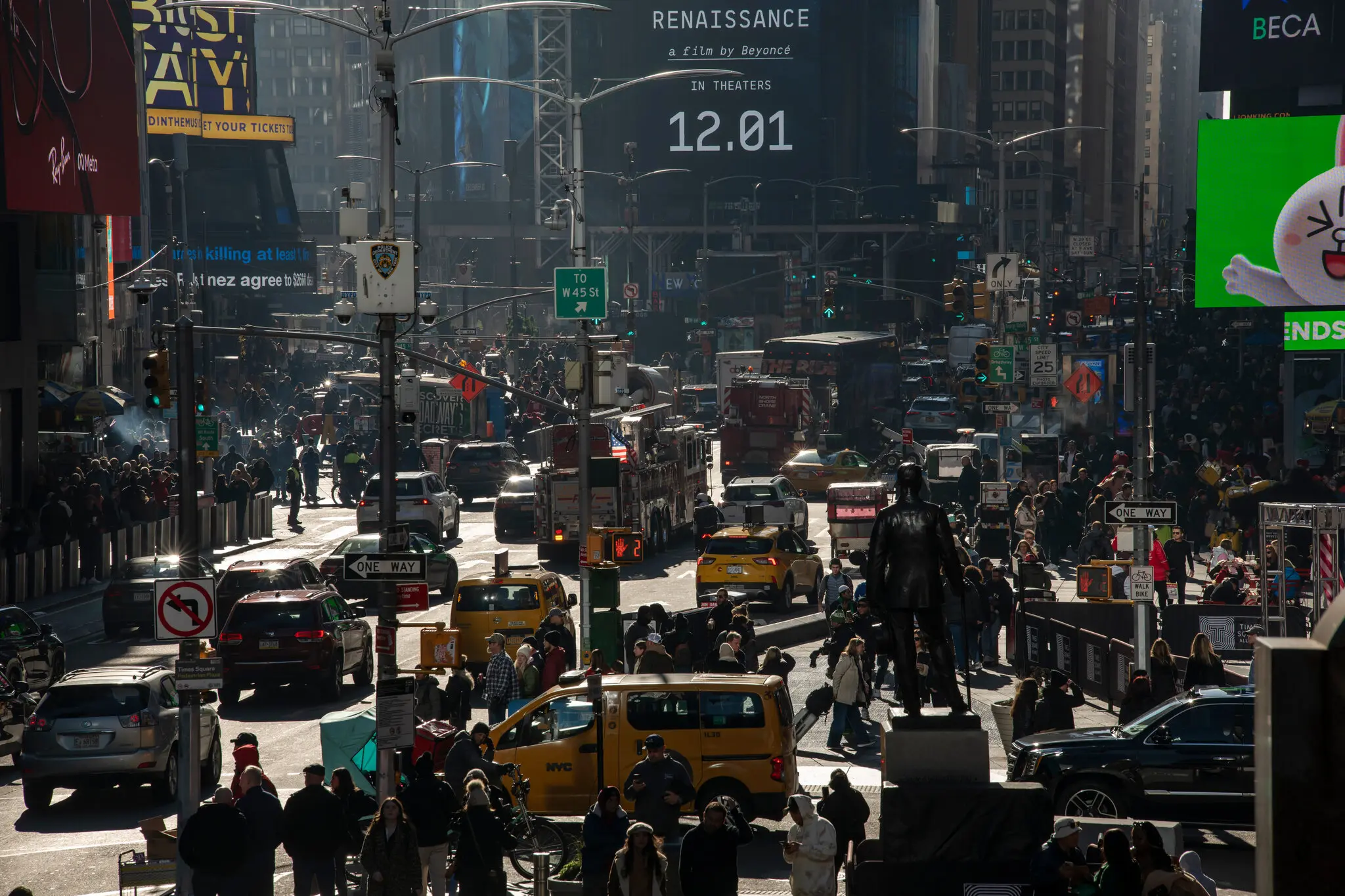
By the mid-2010s, the pedestrian plazas had been made permanent, rebuilt with granite paving and coordinated street furniture. By 2019, officials reported pedestrian traffic had increased by 30%, with approximately 466,000 people walking through Times Square each day. This outcome aligned closely with the 1980 projection that the area would need to accommodate roughly 500,000 daily visitors who were previously overflowing sidewalks and waiting in dangerous intersections. The redesign successfully transitioned Times Square from a transit bottleneck into a major pedestrian destination at the center of the city’s multibillion-dollar tourism economy.
Air Quality Data in Midtown (CD5) area, 2009-2024
Concentration of fine particles in the air
Annual mean (mcg/m³)
Concentration of nitrogen dioxide in the air
Annual mean (ppb)
2025: Congestion Pricing and the Next Phase
Despite the permanent implementation of the plaza in the mid-2010s, the underlying question remained unresolved: how should the city distribute the costs of mobility and environmental improvement? In 2025, the debate resurfaced, when New York launched the first congestion pricing program in the United States, tolling drivers entering Manhattan’s busiest streets to reduce traffic and raise $15 billion for transit upgrades. From diverted traffic in 1980 to congestion tolls in 2025, the history of Times Square demonstrates that environmental progress is an ongoing political negotiation over whose mobility is prioritized and whose costs are made visible.